Isolation room validation and ICU air quality testing
Isolation rooms and intensive care units protect patients and staff through controlled air. We validate pressure, air changes, filtration and alarms so your infection control team has measured evidence that these critical spaces work as designed.
Protecting patients through controlled air
Negative pressure isolation rooms keep airborne infections contained by drawing air inward and exhausting it safely. Positive pressure rooms protect vulnerable patients, such as some transplant or immunocompromised patients, by keeping unfiltered air out. Both depend on pressure, air volume and doors working correctly.
ICUs may not be classified cleanrooms, but they rely on filtered supply air, sufficient air changes and controlled pressure relationships with corridors and isolation rooms. These controls weaken quietly when filters load, dampers change or doors are left open.
Validation uses calibrated instruments to measure pressure differences, air changes, filter integrity and environmental conditions, and confirms that room pressure monitors and alarms respond correctly. Testing is planned with nursing teams to avoid disrupting patient care.
Detailed methods are described on our differential pressure testing page, and the wider hospital programme on our hospital validation page.
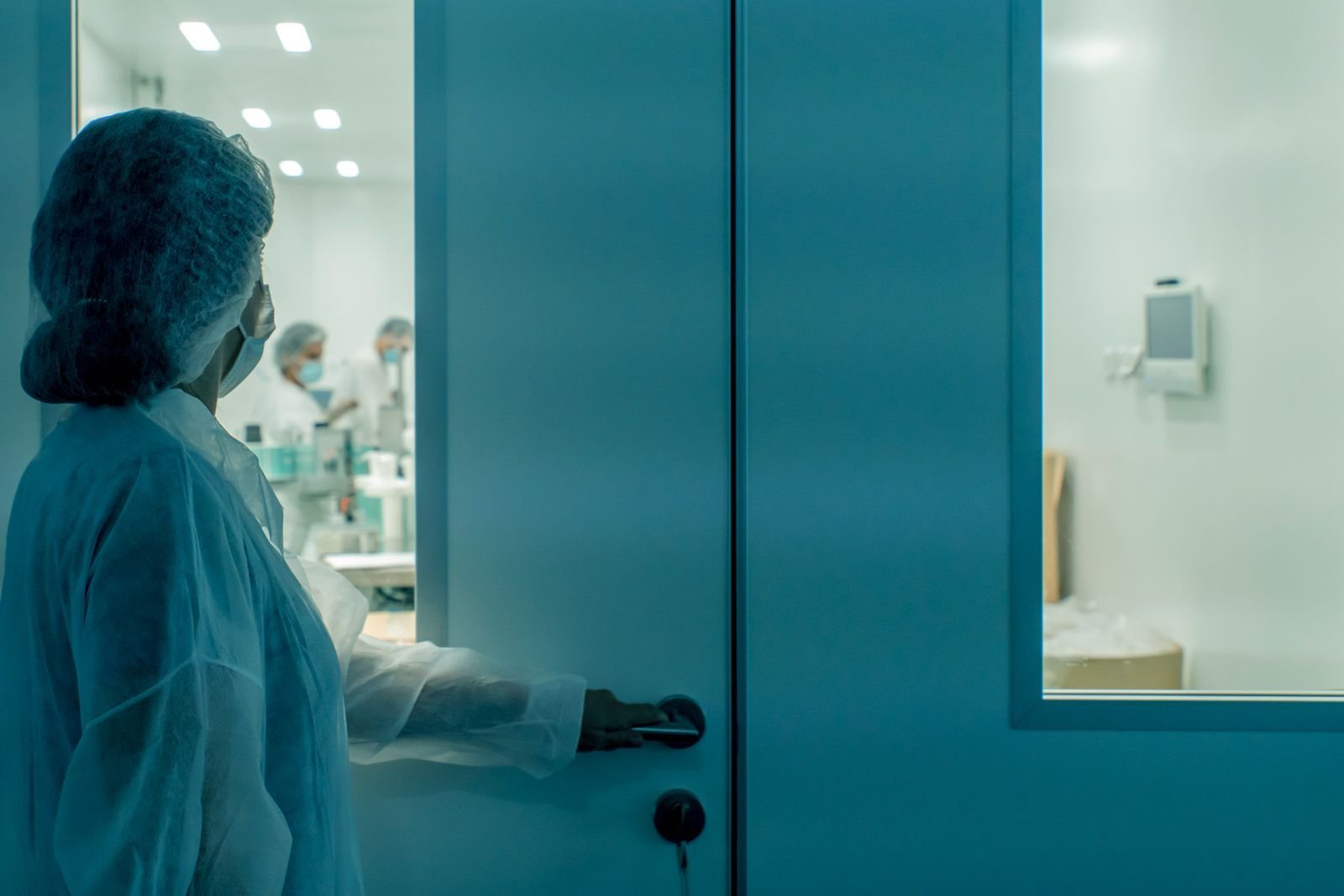
Critical spaces need proven conditions
Infection control
Correct pressure and air changes limit airborne spread to and from vulnerable patients.
Staff safety
Negative pressure rooms protect staff caring for patients with airborne infections.
Accreditation evidence
Hospital audits expect documented validation of isolation and critical care areas.
Isolation room and ICU tests
- Pressure direction and magnitude
- Anteroom and corridor pressure relationships
- Air changes per hour
- HEPA filter integrity (supply or exhaust)
- Room pressure monitor accuracy
- Pressure alarm function
- Particle counts in ICU bays
- Temperature and humidity
Hospital areas we validate
- Negative pressure rooms
- Positive pressure rooms
- ICU bays
- High dependency units
- Burns units
- Transplant units
- NICU
- Emergency isolation
Trusting your room pressure monitor
Most isolation rooms have a wall-mounted pressure monitor that shows staff whether the room is working. If the sensor drifts, the display may show safe readings while the room has actually lost pressure. We check each monitor against a calibrated reference and confirm its alarm responds when pressure is lost, for example when a door is opened.
Staff should never silence or disable pressure alarms. Repeated alarms usually point to a genuine issue such as a door that does not close fully or a failing exhaust fan.
Testing occupied units safely
Most measurements are non-intrusive and can be made with patients present, with care and coordination. We work bay by bay, agree timings with nurses in charge and keep movement and noise to a minimum. Read more in our isolation room guide and ICU air quality article.
What the validation report shows
Each room receives results for pressure direction and magnitude, air changes, filter integrity, monitor accuracy and alarm response, together with observations and recommendations. Reports are structured so infection control committees and accreditation assessors can quickly see that every isolation room and ICU area was verified.
Keeping these reports with HVAC maintenance records helps your team link any change in performance to its cause.
Keeping rooms in control every day
Staff should keep isolation room doors closed, use anterooms correctly and check the pressure monitor at each shift. Any alarm or unexpected reading should be reported to facilities immediately, not silenced.
How the work is carried out
Area review
We review room types, design pressures and air change rates.
Pressure and airflow
Pressure cascades and air changes are measured with calibrated instruments.
Filters and alarms
HEPA filters, monitors and alarms are checked.
Report
Room-by-room results are documented for infection control and audits.
One accountable team, documented results
NABL-Accredited
Calibration and testing carried out under NABL accreditation and ISO/IEC 17025:2017-compliant procedures.
On-Site & Laboratory Capability
Work carried out at your facility or in our laboratory, by one accountable team.
Serving Since 2022
Serving hospitals, laboratories, pharmaceutical and industrial clients across Tamil Nadu since 2022.
Frequently asked questions
Validate your isolation rooms and ICU
Share your room list and design values, and we will plan testing around patient care.