Vanavil Calibrations

Clean room environmental monitoring that keeps your cleanroom in control

Certification shows a cleanroom met its class on the day of testing. Environmental monitoring shows it stays in control every day in between. We help you set up, verify and support the monitoring that protects your process.

Clean room environmental monitoring is the routine, ongoing measurement of particles, pressure, temperature, humidity and other conditions in a cleanroom to confirm it remains within limits between formal classifications. Vanavil Calibrations supports environmental monitoring programmes with periodic testing, sensor calibration and data review for facilities across Tamil Nadu.

Monitoring between certifications

A cleanroom can drift out of control between annual certifications without anyone noticing. A filter may begin to leak, a door closer may weaken, or HVAC changes may alter room pressures. Environmental monitoring catches these changes early through regular, planned measurements.

A typical programme defines what is measured, where, how often and against which alert and action limits. Physical parameters such as non-viable particle counts, differential pressure, temperature and humidity are monitored alongside any microbiological sampling carried out by your own quality team.

Many facilities use fixed sensors connected to a monitoring system, supported by periodic portable measurements. The fixed sensors themselves need regular calibration, otherwise the system may show reassuring readings that are simply wrong.

Monitoring works hand in hand with formal ISO 14644 cleanroom classification and clean room certification, which set the baseline that monitoring protects.
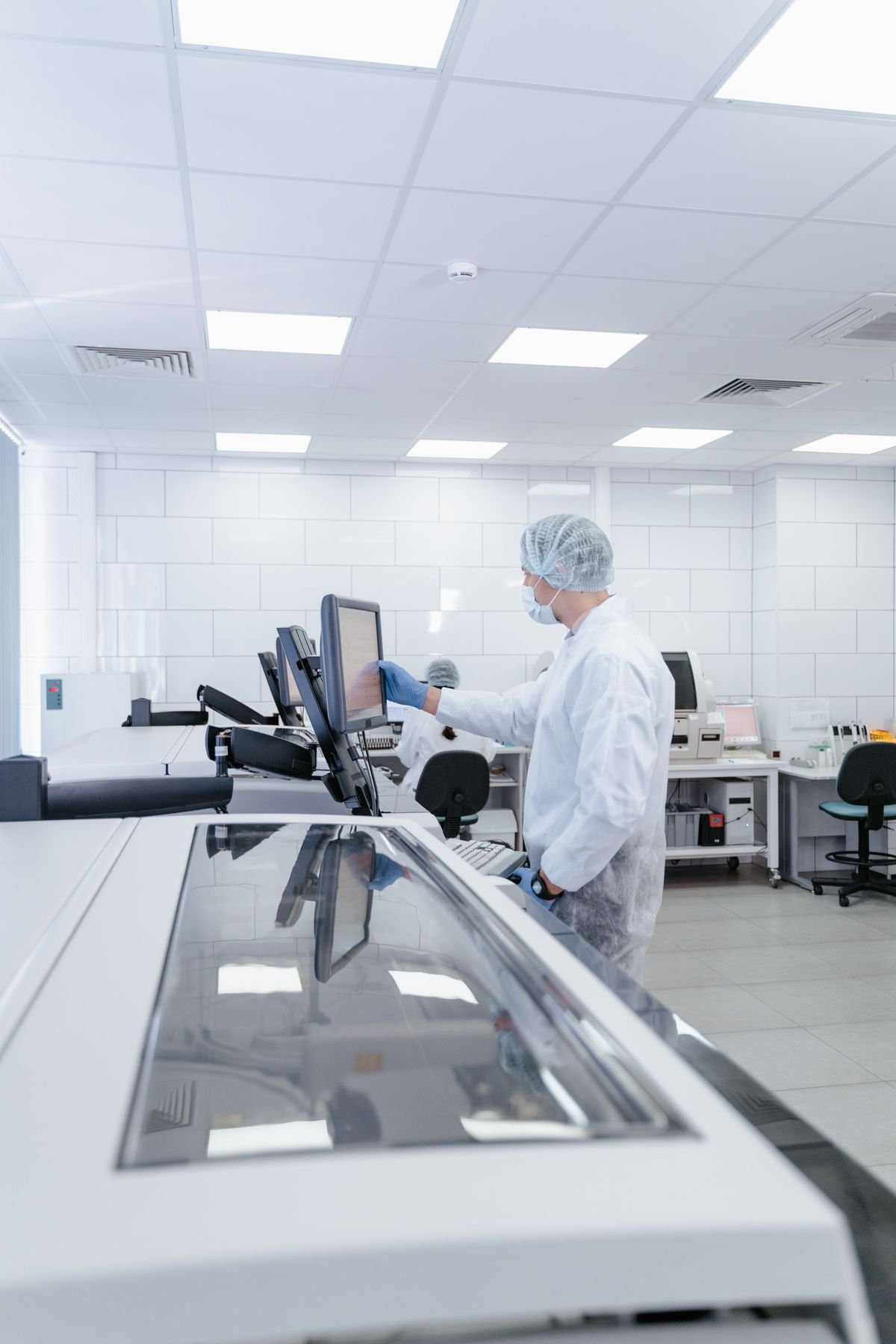
Clean room environmental monitoring with calibrated instruments

Catch drift before it becomes a failure

Continuous assurance

Routine data shows the room stays in control, not just on certification day.

Faster investigations

Trend data helps teams find the cause of excursions quickly.

Audit evidence

Inspectors expect documented monitoring with defined limits and reviewed results.

Environmental monitoring services

  • Periodic non-viable particle monitoring
  • Differential pressure monitoring checks
  • Temperature and relative humidity monitoring
  • Calibration of fixed monitoring sensors
  • Calibration of pressure gauges and transmitters
  • Monitoring location review
  • Alert and action limit guidance
  • Trend review and reporting

Where monitoring matters

  • Pharmaceutical cleanrooms
  • Aseptic areas
  • Hospital OTs
  • Blood banks
  • QC laboratories
  • Biotech labs
  • Electronics
  • Packaging rooms

Choosing where to monitor

Monitoring locations should reflect risk. Points close to exposed product, critical work zones, doorways between classes and areas where air may stagnate are usually given priority. Classification data and airflow visualization studies help identify these positions objectively.

Locations should be documented with drawings so the same points are sampled each time. Consistent locations make trends meaningful and help teams see real changes rather than differences caused by moving the sampling point.

Setting limits that work

Alert limits give an early warning that conditions are moving away from normal. Action limits trigger investigation and corrective action. Limits are often based on the room's class, historical data and the risk to the process.

Reviewing limits periodically keeps them meaningful. Limits that are never reached may be too loose; limits that are reached constantly may be unrealistic or point to a genuine problem that needs fixing.

Calibrating your monitoring sensors

Fixed particle counters, pressure transmitters and temperature and humidity probes form the backbone of most monitoring systems. Each should be calibrated on a defined schedule, with as-found and as-left results recorded, so the data your team reviews every day reflects real conditions.

How the work is carried out

01

Programme review

We review your current monitoring locations, frequencies and limits.

02

Sensor calibration

Fixed particle, pressure, temperature and humidity sensors are calibrated against references.

03

Periodic testing

Portable measurements confirm conditions at key locations.

04

Trend reporting

Results are summarised so your team can see trends and act early.

One accountable team, documented results

NABL-Accredited

Calibration and testing carried out under NABL accreditation and ISO/IEC 17025:2017-compliant procedures.

On-Site & Laboratory Capability

Work carried out at your facility or in our laboratory, by one accountable team.

Serving Since 2022

Serving hospitals, laboratories, pharmaceutical and industrial clients across Tamil Nadu since 2022.

Frequently asked questions

Classification is a formal test against class limits at a point in time. Environmental monitoring is the routine sampling that shows the room remains in control between classifications.
Yes. Fixed sensors drift like any instrument. Periodic calibration ensures the monitoring system shows true values.
Our services focus on physical parameters such as particles, pressure, temperature and humidity. Microbiological sampling is usually performed by your quality or microbiology team.
Frequency depends on the room's class and the risk to your process. Critical areas are monitored more often than supporting areas.
We can review your data and limits and share observations, while final limits remain your quality team's decision.
Yes. We support facilities across Tamil Nadu from our Salem laboratory.

Strengthen your environmental monitoring

Share your current programme and sensor list, and we will plan calibration and support.