Vanavil Calibrations

Temperature calibration for sensors, thermometers and controllers

Temperature is the most measured quantity in most facilities, and one of the easiest to get wrong. We calibrate the sensors, indicators and controllers you rely on against traceable temperature standards.

Temperature calibration compares a temperature sensor or instrument with a traceable reference at set temperatures to find and document its error. Vanavil Calibrations provides thermal calibration for RTDs, thermocouples, thermometers, indicators and controllers, on-site or in our NABL-accredited laboratory.

How temperature calibration works

Temperature sensors age. Thermocouples drift with heat cycling, RTDs change with mechanical stress, and indicators and controllers can shift after service. The result is a process, fridge or oven running hotter or colder than the display suggests.

We use the comparison method: the instrument under test and a reference probe are placed in a stable heat source, such as a dry-block calibrator or liquid bath, and readings are compared at several temperatures across the working range.

The same approach applies to digital thermometers used in laboratories and hospitals, and to the temperature loop of equipment such as incubators and ovens. For equipment-level checks, see Laboratory Equipment Calibration.
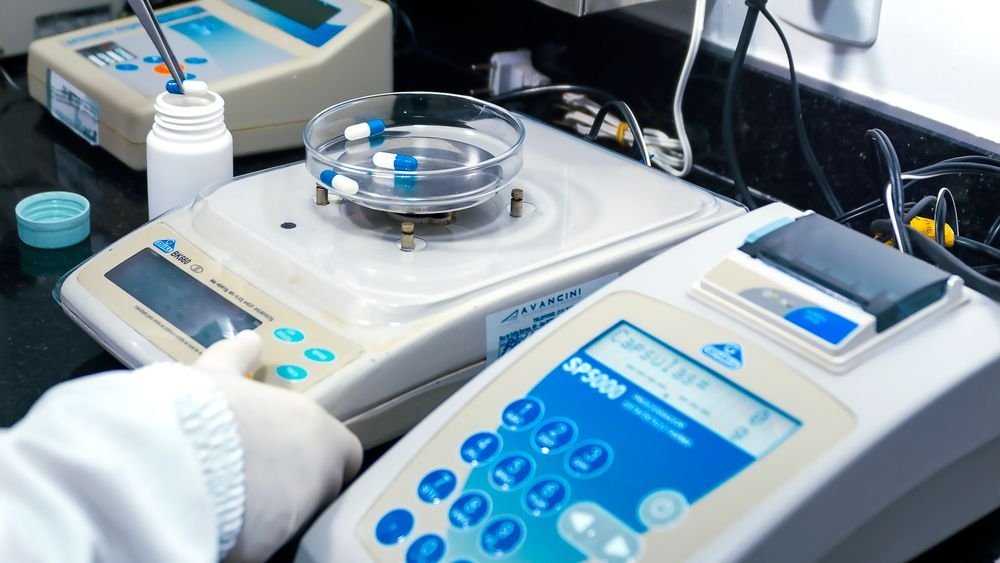
Temperature and humidity instruments during calibration

Small temperature errors, big consequences

Product quality

Sterilisation, drying, curing and storage all depend on reaching and holding the right temperature.

Safe storage

Vaccines, blood, reagents and samples need cold storage that really is at its set point.

Energy and cost

A controller that overshoots wastes energy; one that undershoots risks rejected batches.

Temperature instruments we calibrate

  • RTDs (Pt100) and resistance thermometers
  • Thermocouples
  • Digital and glass thermometers
  • Temperature indicators
  • Temperature controllers
  • Temperature transmitters
  • Data loggers
  • Sensors in equipment control loops

Where temperature calibration is needed

  • Pharmaceutical plants
  • Hospitals
  • Laboratories
  • Cold rooms
  • Food processing
  • Manufacturing
  • Blood banks
  • Warehouses

How the work is carried out

01

Range and points

We agree the temperatures that matter for how each instrument is used.

02

Comparison

Instrument and reference are compared in a stable heat source at each point.

03

Adjustment support

Where the instrument allows it, offsets are corrected and re-checked.

04

Certificate

Results, uncertainty and status are documented for each instrument.

One accountable team, documented results

NABL-Accredited

Calibration and testing carried out under NABL accreditation and ISO/IEC 17025:2017-compliant procedures.

On-Site & Laboratory Capability

Work carried out at your facility or in our laboratory, by one accountable team.

Serving Since 2022

Serving hospitals, laboratories, pharmaceutical and industrial clients across Tamil Nadu since 2022.

Frequently asked questions

Both are compared with a reference at set temperatures. RTDs are resistance-based and generally more stable; thermocouples generate a voltage, cover wider ranges and can drift more with use, so they may need more frequent checks.
Usually at least three points spread across the range the instrument actually uses, for example near the minimum, the typical working temperature and the maximum.
No. Calibration checks the accuracy of an instrument. Temperature mapping measures how temperature varies across a space, such as a cold room or warehouse. Read our temperature mapping guide.
Often yes, by placing a reference probe next to the fixed sensor, or by using a dry-block where the sensor can be removed. We advise the best method for each installation.

Calibrate your temperature instruments

Tell us what you measure and at what temperatures, and we will plan calibration points and a schedule.