Hospital Operation Theatre Validation: A Checklist for Biomedical and Infection Control Teams
An operation theatre is only as clean as the air inside it. Filtered supply air, the right number of air changes and correct pressure against neighbouring areas all help protect patients from airborne contamination. Hospital operation theatre validation proves these controls work. This checklist helps biomedical and infection control teams prepare for, carry out and follow up OT validation.
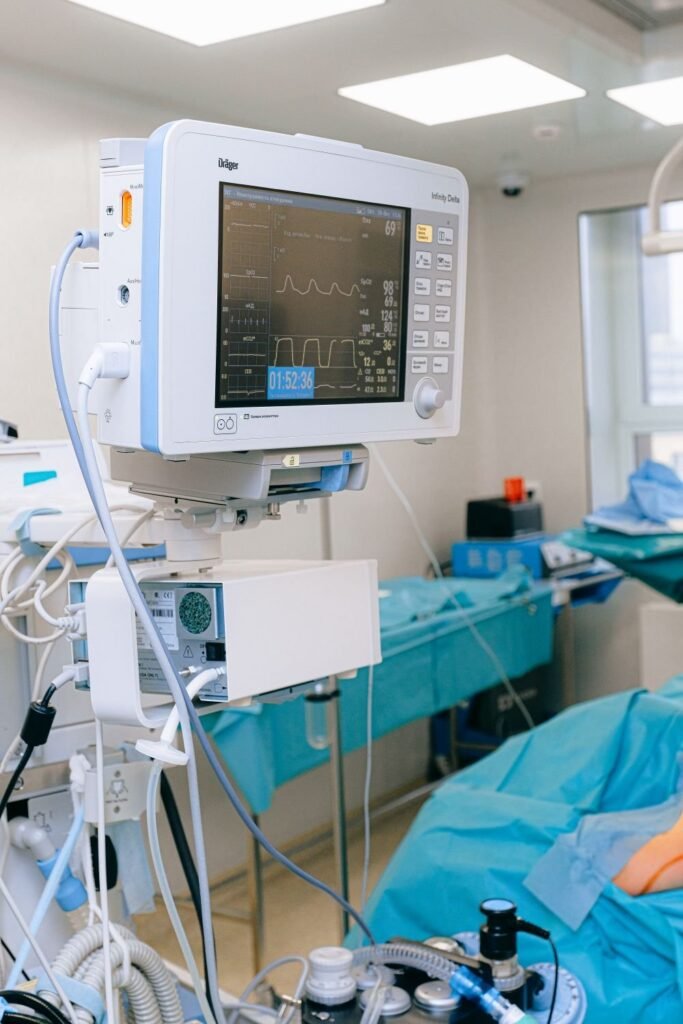
Table of contents
- Before validation
- Tests to include
- On the day
- After validation
- A worked example: validating a general OT
- Common findings in OT validation
- Roles and responsibilities
- Between validations
- Records for audits
- Choosing a validation provider
- Setting a validation frequency
- Quick summary
- Frequently asked questions
Before validation
- Confirm which theatres and associated areas (scrub, recovery, sterile store) are in scope.
- Collect design information: intended class, air change rate and pressure relationships.
- Check the HVAC system has been running normally and filters are not due for change.
- Agree a date when theatres can be closed to surgery.
- Inform housekeeping so terminal cleaning is complete beforehand.
Tests to include
- HEPA filter integrity — checks terminal filters for leaks. See HEPA filter testing.
- Airflow velocity and air changes per hour — confirms supply volume. See airflow and ACPH testing.
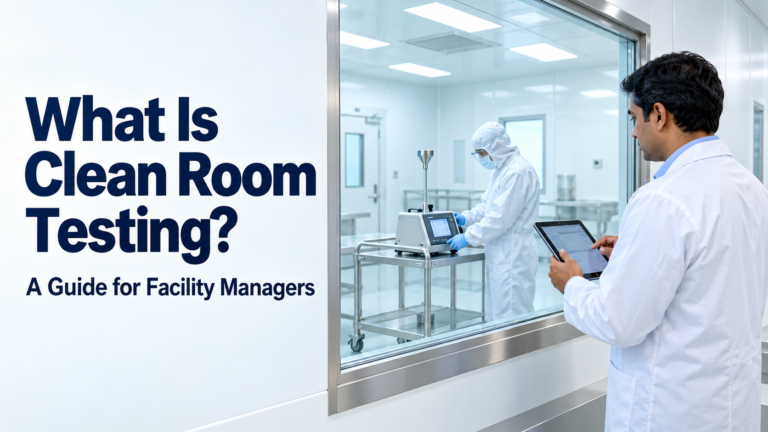
- Airborne particle count — checks cleanliness against the intended class.
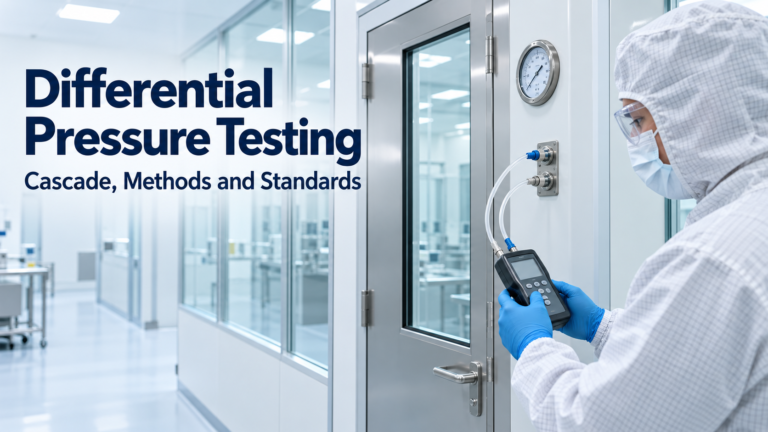
- Differential pressure — confirms the theatre is positive to adjacent areas.
- Temperature and relative humidity — within the hospital’s defined range.
- Recovery test — how quickly the room cleans up after a particle challenge.
- Noise and lux levels — comfort and working conditions for the surgical team.
- Airflow visualisation where unidirectional airflow over the table is used.
On the day
- Keep doors closed and movement to a minimum during particle counts.
- Record whether testing is “at rest” or “in operation”.
- Have a maintenance technician available to adjust dampers if needed.
- Note any observations, such as damaged filter gaskets or unsealed penetrations.
After validation
- Review the report with the infection control committee.
- Correct failures — filter replacement, balancing, sealing — and re-test affected parameters.
- File reports for accreditation and audits.
- Set the next validation date and any interim checks.
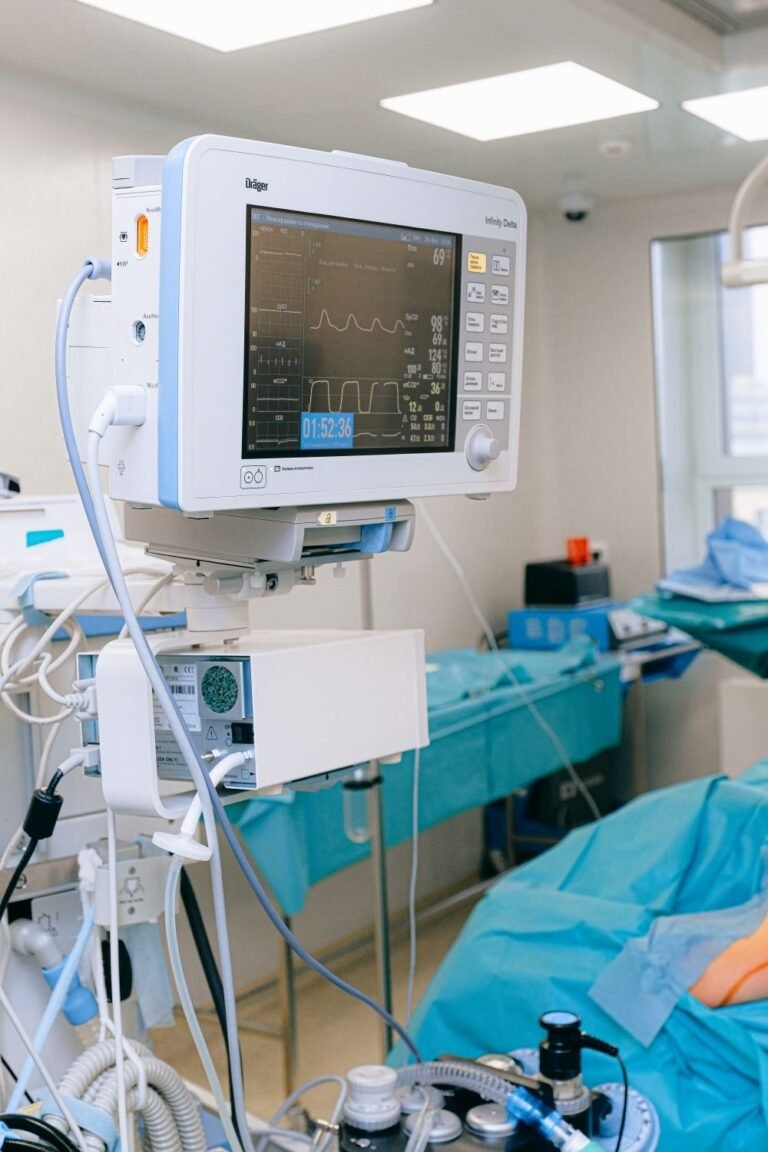
Equipment inside the theatre also needs calibration. See anaesthesia workstation calibration and ESU calibration.
A worked example: validating a general OT
A hospital schedules validation for one of its general operation theatres on a Sunday when no elective lists are planned. Terminal cleaning is completed on Saturday evening, and the HVAC system is left running normally overnight.
On arrival, the validation team reviews the design information: the theatre’s intended cleanliness level, its design air change rate and the expected pressure difference to the corridor and scrub area. They then inspect the ceiling filters, return grilles, doors and wall penetrations.
Testing starts with HEPA filter integrity, scanning each terminal filter and its seal for leaks. Airflow velocity is measured at each supply outlet and used to calculate air changes per hour. Differential pressure is recorded between the theatre and each adjacent space with doors closed. Particle counts are taken at planned locations around the table and room. A recovery test follows, measuring how quickly particle levels fall after a controlled challenge. Temperature, humidity, noise and lux levels complete the set.
One filter shows a small leak at its gasket, and the pressure to the corridor is slightly lower than expected because a door closer is weak. The maintenance team replaces the gasket and adjusts the door closer the same day. The affected tests are repeated and pass. The report records both the initial findings and the corrective actions, which gives the infection control committee a complete picture.
Common findings in OT validation
- Filter or gasket leaks at terminal HEPA housings.
- Low air changes caused by loaded filters or fan speed changes.
- Pressure problems due to door gaps, weak door closers or exhaust imbalance.
- Unsealed penetrations around lights, pendants or service pipes.
- Temperature or humidity outside the defined range, often linked to chiller or reheat issues.
- High noise levels from worn fans or dampers.
Roles and responsibilities
- Infection control: sets the requirements and reviews results.
- Biomedical and facilities teams: prepare the theatre, support testing and carry out corrective work.
- Theatre management: schedules closure and communicates with surgical teams.
- Validation provider: performs tests with calibrated instruments and issues the report.
Between validations
Validation is periodic, so everyday practices matter. Keep theatre doors closed during surgery, limit traffic, monitor pressure gauges if installed, and report unusual temperatures or noise. Filter changes and HVAC maintenance should trigger at least partial retesting. Keeping a simple log of these events makes it easy to decide when revalidation is due.
Records for audits
Keep each theatre’s validation reports together with filter change records, HVAC maintenance logs and corrective action records. Auditors often ask to see the most recent report and evidence that any failures were addressed, so make these easy to find.
Choosing a validation provider
OT validation is only as reliable as the instruments and methods used. Ask your provider which particle counter, anemometer, aerosol photometer and pressure instruments they use, and confirm each carries current traceable calibration. Check how sampling locations are chosen, how results are compared with the theatre’s design and acceptance criteria, and what the report will include. A good report shows raw readings, locations, acceptance criteria, observations and a clear conclusion for each parameter. Where accredited results are needed, confirm the tests fall within the laboratory’s NABL scope.
Also ask whether the provider can calibrate the theatre’s equipment in the same visit. Combining room validation with calibration of anaesthesia workstations, ESUs, monitors and defibrillators reduces the number of theatre closures needed each year.
Setting a validation frequency
Many hospitals validate theatres annually, but the right frequency depends on your infection control policy, the type of surgery performed and the condition of the HVAC system. Theatres used for implant or high-risk surgery may justify more frequent checks of key parameters. Record the reasoning behind your chosen frequency in your procedure so auditors can see it was a deliberate decision.
Quick summary
Prepare the theatre, test filters, air changes, particles, pressure, recovery and comfort parameters, correct any failures and keep complete records. Following this checklist every year keeps operation theatres clean, safe and ready for audit.

Frequently asked questions
How often should OTs be validated?
Many hospitals validate at least annually and after HVAC changes, filter replacement or renovation. Your infection control policy sets the final frequency.
Can validation be done while theatres are in use?
Most tests are done with the theatre closed to surgery. Some “in operation” measurements can be planned with the theatre team.
What if the pressure test fails?
The HVAC team balances supply and exhaust, checks door seals and re-tests before the theatre returns to use.
Who should receive the validation report?
Typically the biomedical department, infection control committee, facility management and quality team.
Is particle counting done with the theatre empty?
Validation is often carried out “at rest” with no people or activity. Some hospitals also measure “in operation” conditions during a planned session.
What happens if a filter fails the integrity test?
The leak is repaired or the filter replaced, and the test is repeated before the theatre returns to use.
Conclusion
A checklist keeps OT validation organised: prepare well, test the right parameters, fix what fails and keep the records. The result is cleaner theatres and stronger audit evidence.
External reference: NABL India.
Planning OT validation? See our operation theatre validation service or contact our team.