Modular OT Testing: Airflow, Pressure and Particle Checks Explained
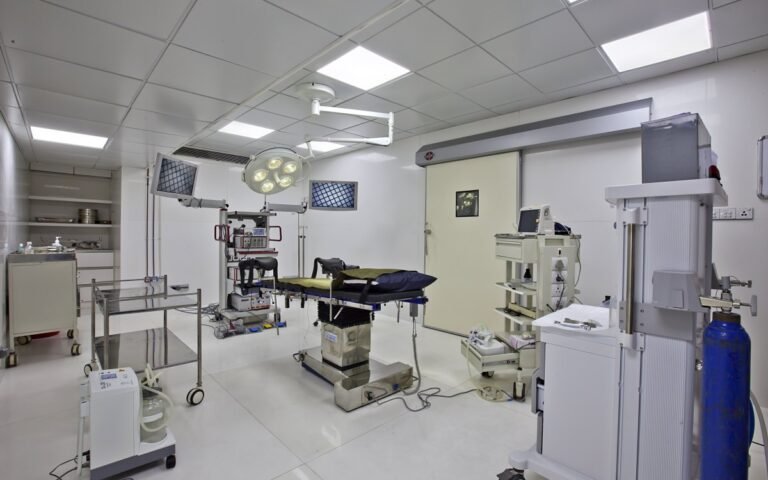
Modular operation theatres use prefabricated wall and ceiling panels, sealed joints and a ceiling-mounted air supply that delivers clean air over the operating table. They are designed for easy cleaning and controlled airflow. Modular OT testing confirms that this design delivers what it promises once installed and in use.
Table of contents
- What makes a modular OT different
- Key tests
- At handover and after
- Common findings
- A worked example: handover of a new modular OT
- Design features that affect results
- Testing across the theatre’s life
- Documentation
- Equipment inside the modular OT
- Choosing a provider for modular OT testing
- Common mistakes to avoid
- Daily care of a modular OT
- Frequently asked questions
What makes a modular OT different
In a modular OT, a large filtered air supply above the table creates a low-turbulence flow over the surgical field. Seamless panels and sealed fittings reduce places where dust can collect or leak in. Because the design depends on airflow and sealing, testing focuses on both.
Key tests
- Airflow velocity across the supply diffuser over the table, checking uniformity
- HEPA filter integrity of the ceiling supply filters
- Air changes per hour for the whole theatre
- Differential pressure relative to corridors and ancillary rooms
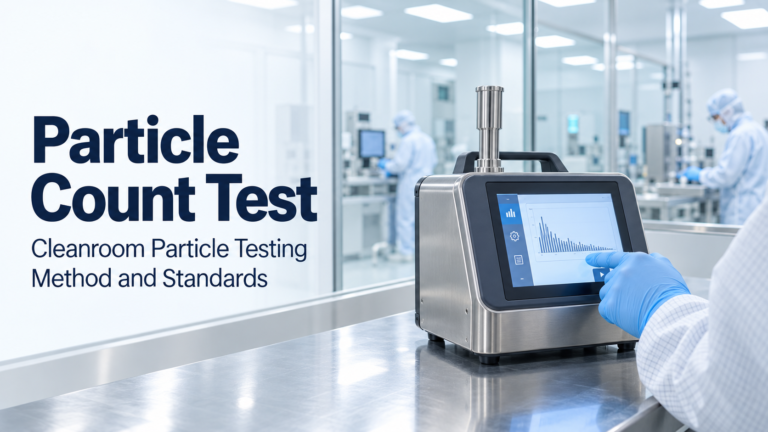
- Particle counts at and around the table area
- Recovery test after a particle challenge
- Airflow visualisation to show flow direction over the table
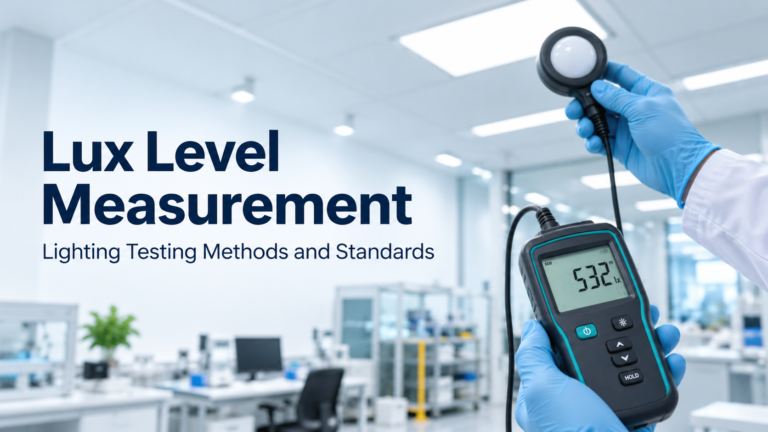
- Temperature, humidity, noise and lux levels
Each of these is covered in our OT validation checklist.
At handover and after
Testing a new modular OT before it is handed over gives the hospital independent evidence that the installation meets its design. After that, periodic validation shows it still performs as filters load, seals age and the building changes around it. Retest after filter replacement, HVAC changes or panel repairs.
Common findings
- Uneven airflow across the supply diffuser
- Leaks at filter gaskets or housing frames
- Low pressure difference because of door gaps or exhaust imbalance
- Unsealed service penetrations in panels
- Temperature and humidity drifting outside the defined range
Most of these are straightforward to correct once identified, which is why independent testing is valuable.
A worked example: handover of a new modular OT
A hospital has installed two new modular operation theatres. Before surgery begins, the hospital commissions independent testing to confirm the contractor’s installation meets its design.
The validation team first reviews the design documents: the intended cleanliness level, supply air volume, pressure relationships and the specification of the ceiling supply unit over the table. They inspect panel joints, door seals, lighting and pendant penetrations and the return air grilles.
HEPA filters in the ceiling supply unit are scanned for leaks. Airflow velocity is measured across the supply face at a grid of points to check uniformity over the table. Overall air changes per hour are calculated. Pressure differences to the corridor, scrub and sterile store are recorded. Particle counts are taken at the table and around the room, and a recovery test is performed. Smoke visualisation shows whether air flows down and outward over the table as intended. Temperature, humidity, noise and lux levels are also measured.
The results show that one corner of the supply diffuser has lower velocity than the rest, and one pendant penetration is unsealed. The contractor rebalances the diffuser and seals the penetration. Retesting confirms both issues are resolved, and the hospital accepts the theatres with a complete report on file.
Design features that affect results
- Supply diffuser size and position relative to the operating table.
- Return air location, usually low on the walls, which shapes airflow.
- Door design and closers, which influence pressure stability.
- Pendants and lights under the supply unit, which can disturb airflow.
- Panel and joint sealing, which prevents air leakage and dust traps.
Understanding these features helps the team interpret results and target corrective actions.
Testing across the theatre’s life
- Handover: full testing before first use.
- Periodic: commonly annual, to confirm continued performance.
- After changes: filter replacement, HVAC modifications, new pendants or panel repairs.
- After incidents: such as water leaks or construction work nearby.
Documentation
Keep the design documents, handover validation report, periodic reports and all corrective action records together for each modular OT. This file shows how the theatre has performed over time and supports accreditation and infection control reviews.
Equipment inside the modular OT
A validated room is only part of theatre safety. The anaesthesia workstation, ESU, monitors and defibrillator in each theatre also need calibration. Scheduling equipment calibration on the same closure day as room validation reduces disruption. See our articles on anaesthesia workstation calibration and ESU calibration.
Choosing a provider for modular OT testing
Modular OT testing requires instruments that can measure airflow uniformity across a large supply diffuser, scan HEPA filters for leaks, count particles and measure pressure accurately. Ask your provider which instruments they use and whether each is calibrated with traceability. Confirm how many measurement points will be taken across the supply face, how uniformity will be assessed, and how results are compared with the design. The report should include sampling locations, readings, acceptance criteria, observations and a clear pass or fail for each parameter.
For new installations, it helps to involve the provider early so testing can be scheduled before the planned opening date, leaving time for any corrective work.
Common mistakes to avoid
- Opening a new modular OT before independent handover testing is complete.
- Adding pendants or equipment under the supply unit without retesting airflow.
- Leaving service penetrations unsealed after maintenance work.
- Changing filters without follow-up integrity testing.
Avoiding these mistakes keeps the theatre performing as designed throughout its life.
Daily care of a modular OT
Between validations, theatre staff can protect performance with simple habits. Keep doors closed during procedures, avoid storing equipment under the ceiling supply unit, clean panels with approved agents that do not damage seals, and report any visible gaps, water marks or unusual noise from the air system. Where pressure gauges are fitted outside the theatre, check them daily and record the readings. A change in pressure is often the first sign that something in the HVAC system needs attention, and catching it early avoids surprises at the next validation.

Frequently asked questions
Is modular OT testing different from standard OT validation?
The tests are similar, with extra attention to airflow uniformity over the table and the sealing of panels and fittings.
Should a new modular OT be tested before use?
Yes. Independent testing at handover confirms the installation meets its design before surgery begins.
How often should modular OTs be retested?
Many hospitals retest at least annually and after filter changes or HVAC work.
Do you provide a report for accreditation?
Yes. Each theatre receives a documented report with results and observations.
Who should commission handover testing?
Hospitals often commission independent testing rather than relying only on the installer’s results, so the evidence is impartial.
Does a modular OT need testing after panel repairs?
Yes. Repairs can affect sealing and airflow, so relevant tests should be repeated before the theatre returns to use.
Conclusion
Modular OTs are designed for clean, controlled air. Testing airflow, filters, pressure and cleanliness proves that design is working — at handover and throughout the theatre’s life.
External reference: NABL India.
Need a modular OT tested? See our operation theatre validation service or contact us.