Anaesthesia Workstation Calibration: Key Checks Before Surgery
An anaesthesia workstation combines gas delivery, a ventilator, vaporisers and patient monitoring in one machine. During surgery, the anaesthetist depends on it to deliver the right gases at the right volumes and to warn of problems immediately. Anaesthesia workstation calibration checks each of these functions against traceable references.
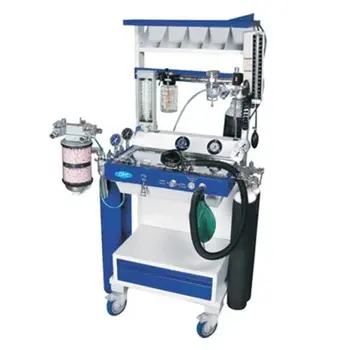
Table of contents
- What an anaesthesia workstation includes
- Key calibration checks
- Daily checks versus calibration
- How often to calibrate
- Planning around theatre lists
- A worked example: calibrating an anaesthesia workstation
- Common problems found in anaesthesia workstations
- Coordinating with anaesthetists and theatre staff
- What your records should include
- Between calibrations
- Choosing a provider for anaesthesia equipment
- Commissioning new workstations
- Frequently asked questions
What an anaesthesia workstation includes
- Gas supply and flowmeters for oxygen, air and nitrous oxide
- Vaporisers for volatile anaesthetic agents
- A breathing system with CO2 absorber
- A ventilator for controlled breathing
- Monitoring of oxygen, pressure, volume and often anaesthetic agents
Each part has its own sensors and settings, and each can drift or leak.
Key calibration checks
- Ventilator performance — delivered tidal volume, rate, pressure and PEEP measured with a gas flow analyser, as in ventilator calibration
- Oxygen monitoring — oxygen sensor reading against a reference concentration
- Flowmeter accuracy — delivered fresh gas flow at set values
- Leak checks — breathing system and machine low-pressure system
- Pressure gauges — pipeline and cylinder gauges and airway pressure display
- Alarms — low oxygen, high pressure, disconnection and supply failure
Where the workstation monitors anaesthetic agents or CO2, those channels are checked with suitable reference gases. Vaporiser output is typically verified by the manufacturer’s service process; ask your provider how it is handled.
Daily checks versus calibration
Before each list, theatre teams run the machine’s self-test and a pre-use checklist. These are essential and catch many problems. Independent calibration adds something different: measurement of actual delivery and monitoring accuracy using traceable equipment, documented on a certificate.
How often to calibrate
Anaesthesia workstations are commonly calibrated at least once a year, in line with the manufacturer’s service schedule and after any repair. Record each workstation with theatre location and due date. Our medical device calibration guide explains how to set intervals.
Planning around theatre lists
- Agree a date with the theatre manager when the OT is closed or lightly used.
- Test one workstation at a time so other theatres continue.
- Combine the visit with operation theatre validation to minimise disruption.
- Replace oxygen cells and consumables due before testing.
A worked example: calibrating an anaesthesia workstation
A typical calibration visit for an anaesthesia workstation in a general theatre follows a clear order so nothing is missed.
- Visual and gas supply check. The engineer inspects hoses, connectors, cylinders, pipeline gauges, flowmeter tubes or electronic flow displays, vaporiser mounts, the breathing system and the absorber canister.
- Machine self-test. The workstation’s own start-up checks are run and any warnings noted.
- Leak checks. The low-pressure system and breathing circuit are checked for leaks, because leaks affect delivered gas and anaesthetic concentration.
- Flow accuracy. Fresh gas flows are compared with a reference flow analyser at several settings for each gas.
- Ventilator performance. A gas flow analyser and test lung measure tidal volume, rate, peak pressure and PEEP in the modes used in theatre.
- Oxygen monitoring. The oxygen sensor reading is compared with a reference at low and high oxygen concentrations.
- Agent and CO2 monitoring where fitted, using suitable reference gases.
- Alarms. Low oxygen, high airway pressure, disconnection, apnoea and supply failure alarms are triggered and confirmed.
- Documentation. Results, uncertainty and status are recorded and the workstation is labelled.
Common problems found in anaesthesia workstations
- Leaks at absorber canisters, vaporiser seals and breathing system connections.
- Oxygen sensors near the end of their life, reading low or responding slowly.
- Flow sensors affected by moisture, giving inaccurate volume readings.
- Worn hoses and connectors on pipeline supplies.
- Alarm limits altered from theatre defaults.
- Backup battery performance below expectations.
Most of these are addressed through planned maintenance. Coordinating maintenance and calibration in the same visit avoids taking the workstation out of service twice.
Coordinating with anaesthetists and theatre staff
Anaesthetists are the primary users of the workstation, so involve them in planning. Share the date of calibration in advance, confirm which theatres will be closed and make sure a calibrated workstation is available for any emergency list. After calibration, give the anaesthesia department a short summary: which units passed, which needed parts, and any settings that were restored to defaults. This openness builds trust in the equipment and in the calibration process.
What your records should include
- Workstation asset number, model, software version and theatre location.
- Analysers used and their calibration status.
- Leak test results, flow accuracy, ventilator measurements and gas monitoring results.
- Alarm tests and outcomes.
- Consumables and parts replaced, such as oxygen cells and seals.
Complete records make it easy to show auditors that every workstation used for anaesthesia is controlled, and they help the biomedical team plan replacements as units age.
Between calibrations
The pre-use checklist remains the most important daily safeguard. Encourage theatre staff to complete it fully before each list, record any faults found and report issues immediately. Recurring checklist failures on one workstation are a signal to bring its calibration or service forward.
Choosing a provider for anaesthesia equipment
Anaesthesia workstation calibration needs specialised analysers and experience with theatre equipment. When choosing a provider, confirm that they have a gas flow analyser suitable for ventilator testing, reference equipment for oxygen and, where needed, agent and CO2 monitoring, and that each analyser carries current traceable calibration. Ask how the provider coordinates with the manufacturer’s service schedule and how results will be reported. Certificates should show measured values, tolerances, measurement uncertainty and a clear status, and the parameters should fall within the laboratory’s NABL scope where accredited results are required.
Finally, check that the provider can work within theatre schedules, including early mornings or weekends if needed, so calibration never delays surgery.
Commissioning new workstations
When a new anaesthesia workstation arrives, record an acceptance check before first clinical use: confirm the gas connections, run the self-test, verify ventilator delivery and gas monitoring with independent analysers, and add the unit to the calibration register. This gives a baseline for future comparisons and ensures the workstation’s first due date is tracked from day one.
Frequently asked questions
Is the machine’s self-test enough?
No. The self-test uses the machine’s own sensors. Independent calibration uses separate, traceable instruments to verify delivery and monitoring.
How long does calibration take?
It depends on the model and functions tested. We plan with the theatre team so surgery is not affected.
Can the workstation be calibrated inside the OT?
Yes. Testing is normally done in place using portable analysers.
Are gas monitors included?
Oxygen monitoring is always checked. Agent and CO2 monitoring are checked where fitted, using suitable reference gases.
Do vaporisers need separate calibration?
Vaporiser output is usually verified through the manufacturer’s service process. Ask your provider how vaporisers are handled and keep their service records with the workstation file.
Should backup ventilation equipment be checked too?
Yes. Self-inflating bags and any backup oxygen supply kept with the workstation should be inspected as part of the theatre’s equipment checks.
Conclusion
Anaesthesia workstation calibration gives theatre teams independent proof that ventilation, gas delivery, monitoring and alarms work as expected. Combined with daily checks, it supports safe anaesthesia in every list.
External reference: NABL India.
Plan workstation calibration with Vanavil Calibrations’ medical equipment calibration team. Contact us.