Baby Warmer Calibration: Temperature Accuracy for Newborn Care
Newborns, especially premature babies, lose heat quickly and cannot regulate their temperature well. Radiant warmers keep them warm during resuscitation, examination and early care. Baby warmer calibration confirms that the warmer measures the baby’s skin temperature correctly and controls its heater safely.
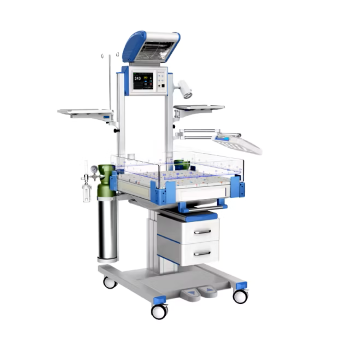
Table of contents
- Why accuracy matters for newborns
- What is checked
- Manual and servo modes
- How often to calibrate
- Tips for labour rooms and NICU
- A worked example: testing a radiant warmer in a labour room
- Common problems found in baby warmers
- Incubators and transport incubators
- Preparing for the calibration visit
- Records and follow-up
- Between calibrations
- Choosing a provider for neonatal equipment
- Commissioning new warmers
- Frequently asked questions
Why accuracy matters for newborns
A warmer that under-heats can let a baby become cold, which increases stress and oxygen demand. A warmer that over-heats can cause overheating or burns. Because newborns cannot tell us they are uncomfortable, staff rely on the warmer’s temperature display and alarms. Those must be right.
What is checked
- Skin temperature probe accuracy — compared with a traceable reference at several temperatures
- Displayed temperature — matches the measured value
- Servo control — heater output responds correctly to the set skin temperature
- Alarms — high and low temperature, probe disconnection, heater failure and power failure
- Heat distribution — warmth across the mattress area where the baby lies
- Timers and APGAR clocks, where fitted
- Visual and electrical safety checks
Manual and servo modes
In manual mode, staff set the heater output directly, so the heater itself must behave predictably. In servo (skin) mode, the warmer adjusts output to keep the baby’s skin at a set temperature, so probe accuracy is critical. Calibration checks both modes where available.
How often to calibrate
Baby warmers are usually calibrated at least once a year and after repair or probe replacement. Probes are the part most likely to fail, so check and replace them as needed. Incubators and phototherapy areas often sit in the same unit, and NICU environments may also need air quality testing; see our hospital validation services.
Tips for labour rooms and NICU
- Keep spare, in-date skin probes on the unit.
- Confirm the probe is attached correctly before relying on servo mode.
- Record each warmer’s location and due date in your register.
- Test alarms during routine checks so staff recognise them.
A worked example: testing a radiant warmer in a labour room
A labour room has two radiant warmers used for newborn resuscitation and initial care. During calibration, the engineer first inspects each warmer: the heater head and guard, the mattress and side panels, the control panel, the skin temperature probe and its cable, and the power cord. The APGAR timer and any built-in lighting are checked for function.
Next, the skin temperature probe is tested. The probe is placed alongside a traceable reference thermometer in a stable temperature source, and readings are compared at several points across the range used in newborn care. The displayed temperature on the warmer is checked against the reference as well.
The engineer then checks servo control. With the probe in a controlled environment, the set temperature is adjusted and the heater’s response is observed to confirm it increases or reduces output appropriately. In manual mode, heater output steps are checked for consistent response. Heat distribution across the mattress is assessed with temperature sensors at several positions. Finally, alarms for high and low temperature, probe disconnection, heater failure and power failure are triggered and confirmed.
Common problems found in baby warmers
- Damaged skin probes with frayed cables or poor contact surfaces.
- Probe readings drifting away from the reference.
- Heater elements that are weakening or uneven.
- Alarms that are too quiet in busy rooms or have been muted.
- Loose or damaged side panels that affect safety.
- Timers that are not working, which matters during resuscitation.
Incubators and transport incubators
Neonatal units often use incubators alongside radiant warmers. Incubator calibration checks air temperature, skin temperature where a probe is used, humidity where fitted, and alarms. Transport incubators need additional attention to battery life and secure mounting because they are used during movement. Registering all neonatal thermal equipment together makes it easier to plan calibration and ensure nothing is missed.
Preparing for the calibration visit
Agree a time with the labour room and NICU teams when a warmer can be released without affecting care. Keep at least one calibrated warmer available at all times. Make sure spare, in-date skin probes are available so faulty probes can be replaced immediately. Clean warmers before testing, as recommended by infection control.
Records and follow-up
For each warmer, record the asset number, location, probe serial number, reference and measured temperatures, alarm test results and any parts replaced. Share a short summary with the neonatal team after the visit. If a warmer fails, withdraw it, repair it and retest it before it returns to service.
Between calibrations
Daily checks by staff are simple but valuable: confirm the warmer powers on, the alarms sound during self-test, the probe cable is intact and the heater warms normally. Report any unusual behaviour immediately, and replace probes at the first sign of damage.
Choosing a provider for neonatal equipment
Neonatal equipment calibration calls for careful work and suitable reference instruments. Ask your provider which temperature references they use for probe testing, how they assess heat distribution across the mattress, and whether they can cover incubators, transport incubators and phototherapy units in the same visit. Certificates should list the reference and measured temperatures, alarm test results, measurement uncertainty and a clear status. Where accredited results are required, confirm the parameters fall within the laboratory’s NABL scope.
It also helps to choose a provider who can work around the unpredictable demands of labour rooms and NICUs, with flexibility to return when a warmer becomes free.
Commissioning new warmers
When a new radiant warmer or incubator is delivered, carry out an acceptance check before it is used for babies: confirm probe accuracy, heater response and alarms, register the unit and record its first calibration due date. A documented baseline makes later drift easy to spot and gives the neonatal team confidence from the first day.
Frequently asked questions
What is the most common fault in baby warmers?
Skin temperature probes are the most common source of problems, from damaged cables to inaccurate readings. They should be inspected at every check.
Can warmers be calibrated in the labour room?
Yes. Testing is done on-site with portable temperature references, one warmer at a time.
Does calibration include the heater element?
Heater performance is checked through control response and heat distribution. Faulty heaters are reported for repair.
Do incubators need the same checks?
Incubators need similar temperature checks plus air temperature, humidity and airflow where applicable.
Can a warmer be used in manual mode if the probe fails?
That depends on hospital policy and clinical judgement. The safest approach is to replace the probe promptly so servo control and alarms work as intended.
Do phototherapy units need calibration?
Phototherapy units are commonly checked for light output with a suitable radiometer as part of neonatal equipment maintenance. Ask your provider whether this can be included.
Conclusion
Baby warmer calibration protects the smallest patients in the hospital. Accurate probes, reliable heater control and working alarms give neonatal teams confidence in every warmer they use.
External reference: NABL India.
Need neonatal equipment calibrated? Vanavil Calibrations provides medical equipment calibration on-site across Tamil Nadu. Contact our team.