Medical Device Calibration: Why Hospitals Need It and How Often
Medical device calibration is one of those tasks that rarely gets attention until something goes wrong. A monitor that reads oxygen saturation a few points high, or an infusion pump that delivers slightly more than it displays, can quietly change clinical decisions. Calibration is how hospitals prove that the numbers on their devices can be trusted.
This guide explains what medical device calibration involves, why it matters, which equipment needs it and how often it should be done.
Table of contents
- What is medical device calibration?
- Why hospitals need it
- Which devices need calibration
- How often to calibrate
- What happens during calibration
- Building a risk-based calibration programme
- Common problems found during calibration
- How to choose a calibration provider
- Frequently asked questions
What is medical device calibration?
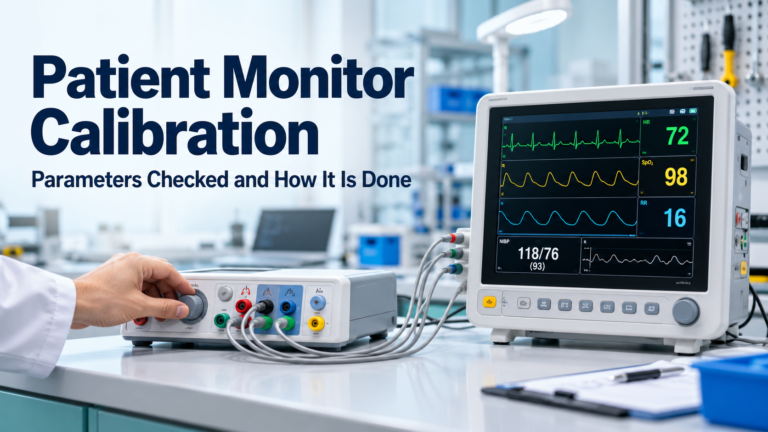
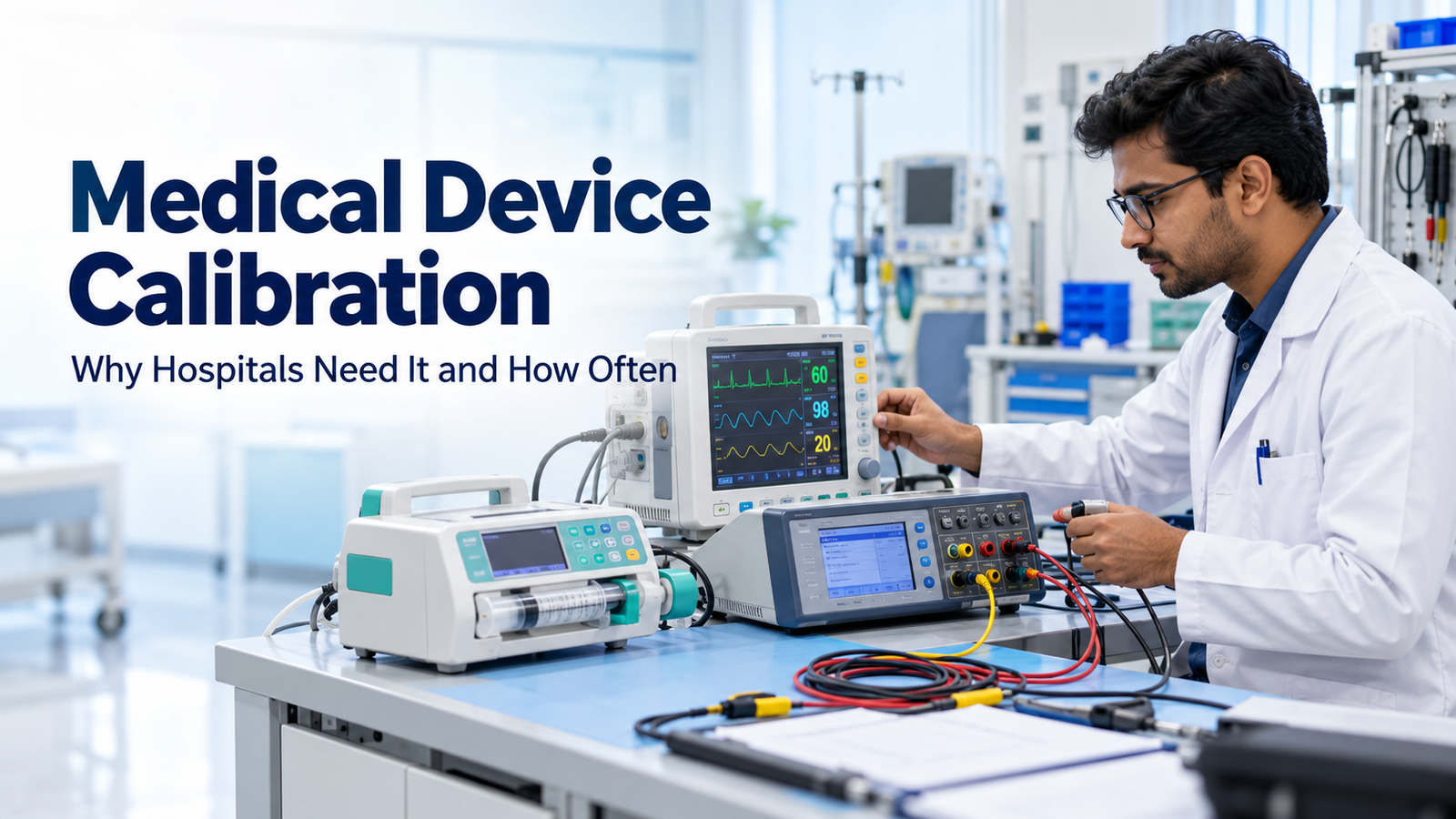
Calibration is the documented comparison of a device’s output with a traceable reference. For a patient monitor, that means feeding it known signals from a patient simulator and checking that it displays the right heart rate, blood pressure, SpO2 and temperature. For an infusion pump, it means measuring the volume actually delivered against the volume set.
The result is a certificate that records what was tested, the reference standards used, the readings obtained, the measurement uncertainty and whether the device is within its tolerance. That certificate is the evidence your biomedical and quality teams need.
Calibration is different from preventive maintenance. Maintenance keeps a device working; calibration shows whether it is working accurately. Both are needed, and they are often scheduled together.
Why hospitals need it
Patient safety
Clinicians act on what devices tell them. A defibrillator that delivers less energy than selected, a ventilator whose delivered volume has drifted, or a thermometer reading low can all lead to the wrong decision at the wrong time. Regular calibration catches drift before it matters.
Accreditation and audits
Hospital accreditation, quality audits and insurance reviews expect a documented calibration record for critical equipment. A current certificate for each device is the simplest way to show that your equipment is controlled.
Better maintenance decisions
Calibration data tells your biomedical team which devices are stable, which drift and which fail repeatedly. That helps you plan repairs, replacements and budgets on evidence rather than guesswork.
Which devices need calibration
Any device that measures, delivers or displays a value used for patient care should be on your calibration list. Common examples include:
- Patient monitors and multiparameter monitors (ECG, SpO2, NIBP, temperature)
- Ventilators and anaesthesia workstations
- Defibrillators and AEDs
- Infusion pumps and syringe pumps
- ECG machines and fetal monitors
- Baby warmers, electrosurgical units and suction apparatus
- Thermometers, weighing scales and blood pressure monitors
Laboratory equipment in the hospital, such as centrifuges, incubators and refrigerators, also needs calibration. See our page on laboratory equipment calibration for details.
How often to calibrate
There is no single interval that suits every device. Most hospitals calibrate critical medical equipment at least once a year, and the interval is usually set by:
- The manufacturer’s recommendation in the service manual
- How critical the device is to patient safety
- How heavily it is used and in what environment
- Its history — devices that drift often need shorter intervals
- Your hospital’s quality policy and accreditation requirements
Devices should also be calibrated after repair, relocation, a drop or any event that could affect accuracy. A simple calibration register with due dates for every device makes this easy to manage.
What happens during calibration
A well-run calibration visit usually follows four steps:
- Inventory. Devices, locations and parameters are listed, and the schedule is agreed with the biomedical team so clinical areas keep running.
- Testing. Each device is checked against traceable reference standards and simulators at several points across its range.
- Documentation. Results, uncertainty and pass/fail status are recorded on a certificate for each device.
- Follow-up. Devices outside tolerance are flagged for adjustment, service or replacement and re-checked afterwards.
When choosing a provider, ask whether the parameters you need fall within their NABL scope of accreditation. Accredited status applies only to parameters and ranges listed in that scope. Our guide to NABL accredited testing laboratories explains what to look for.
Building a risk-based calibration programme
Not every device carries the same consequence if it drifts. A risk-based programme puts the most effort where an error would matter most. A simple way to rank devices is to ask three questions: what does the device do to or for the patient, how quickly would an error cause harm, and how likely is the device to drift based on its history?
- High risk: devices that deliver energy, drugs or breathing support — defibrillators, ventilators, infusion and syringe pumps, anaesthesia workstations, electrosurgical units.
- Medium risk: devices whose readings guide treatment — patient monitors, ECG machines, pulse oximeters, blood pressure monitors, thermometers.
- Lower risk: support equipment where an error is less likely to affect care directly, though it still needs control.
High-risk devices should never be overdue, and their intervals are the first to shorten if failures appear. Medium- and lower-risk devices still need regular calibration, but schedules can be arranged for convenience. Reviewing this ranking once a year keeps the programme realistic as the equipment fleet changes.
Common problems found during calibration
Calibration visits often uncover issues that users had learned to live with. Some of the most frequent are:
- Worn accessories such as SpO2 sensors, NIBP cuffs, ECG leads and temperature probes, which make a working device look faulty.
- Batteries near end of life, especially in defibrillators, transport ventilators and portable monitors.
- Alarm settings changed from hospital defaults or alarms turned down.
- Devices missing from the register because they were bought, borrowed or moved without being recorded.
- Drift in older units that still work but no longer meet their specification.
Recording these findings, not only pass or fail, helps the biomedical team fix root causes such as accessory purchasing or storage practices.
How to choose a calibration provider
A calibration certificate is only as good as the laboratory that issues it. When comparing providers, ask:
- Is the laboratory NABL-accredited, and are the parameters you need inside its scope of accreditation?
- Which analysers and simulators will be used, and are they themselves calibrated with traceability?
- Do certificates show measured results and measurement uncertainty, not just a pass mark?
- Can the work be done on-site, department by department, to limit downtime?
- How are out-of-tolerance results reported and followed up?
Clear answers to these questions protect you in audits and make the results genuinely useful to your team.

Frequently asked questions
Is calibration the same as preventive maintenance?
No. Preventive maintenance keeps a device in good working condition. Calibration measures how accurately it performs against a traceable reference and documents the result. Most hospitals schedule them together.
Can medical devices be calibrated on-site?
Yes. Most medical devices can be calibrated on-site, department by department, which avoids moving equipment out of clinical areas. See our onsite calibration services.
What should a calibration certificate include?
It should identify the device, list the parameters tested and the reference standards used, show measured results and measurement uncertainty, and state whether the device is within tolerance.
What happens if a device fails calibration?
The device should be taken out of clinical use or restricted, adjusted or repaired, and then calibrated again before it returns to service. The failure and corrective action should be recorded.
Do new medical devices need calibration before use?
New devices normally arrive with a manufacturer’s check. Many hospitals still record an acceptance test before first use and add the device to the calibration register so its next due date is tracked from day one.
Can one provider calibrate devices from different manufacturers?
Yes. Calibration is carried out against traceable references and each manufacturer’s tolerances, so a single provider can cover a mixed fleet of equipment.
Conclusion
Medical device calibration turns trust in your equipment into documented evidence. With a clear register, sensible intervals and a competent provider, it protects patients, supports accreditation and gives your biomedical team the data it needs to manage equipment well.
External reference: NABL India.
Planning calibration for your hospital? Vanavil Calibrations provides NABL-accredited medical equipment calibration on-site across Tamil Nadu. Contact our team to share your equipment list.